
Introduction to “AM” and Its Everyday Importance
The abbreviation “AM” is widely used across time, communication, technology, and digital platforms. Despite its simplicity, many people search for its meaning across different contexts because it can carry multiple meanings depending on where it is used. In this article, we explain in detail what does AM stand for, its real-world applications, and how it changes meaning in different situations.
Understanding AM is essential not only for academic knowledge but also for everyday communication, especially in digital messaging, scheduling, and social media platforms.
What Does AM Stand For in Time Format?
The most common and widely recognized meaning of AM is related to time.
AM Meaning in Clock System
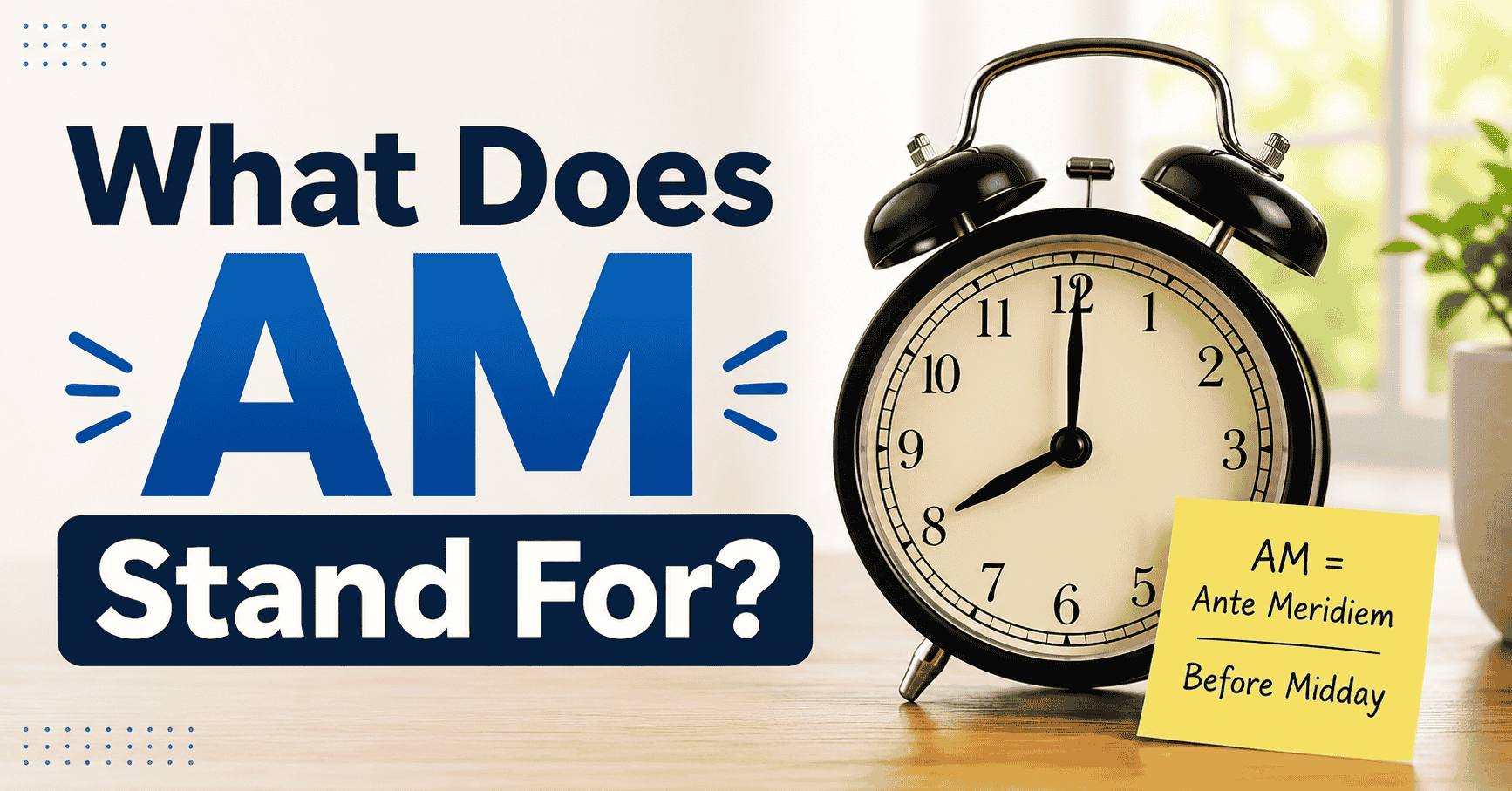
AM stands for “Ante Meridiem,” a Latin phrase meaning “before midday.”
It refers to the time period:
- From 12:00 midnight to 11:59 in the morning
- Used in the 12-hour clock system
How AM Works in Daily Life
When someone says:
- 6:00 AM → Early morning
- 9:00 AM → Morning working hours
- 11:30 AM → Late morning
This system helps distinguish morning hours from afternoon and evening, which are labeled as PM (Post Meridiem).
Difference Between AM and PM
To fully understand AM, it is important to compare it with PM.
AM vs PM Breakdown
- AM (Ante Meridiem): Before 12 noon
- PM (Post Meridiem): After 12 noon
Simple Example
- 7:00 AM = Morning
- 7:00 PM = Evening
This distinction is used globally in watches, digital devices, schedules, transportation systems, and workplaces.
What Does AM Stand For in Digital Communication?
In modern messaging and social media, AM is sometimes used informally, but its meaning can vary depending on context.
Common Interpretations in Chats
- Referring to time (most common usage)
- Shortened typing style in casual conversations
- Occasionally mistaken or used in abbreviations without full awareness
In professional communication, however, AM is almost always related to time formatting.
Why AM Is Important in Scheduling and Planning
The concept of AM plays a crucial role in daily planning.
Key Uses of AM in Real Life
- Work schedules (office timings)
- School and university classes
- Travel and flight bookings
- Medical appointments
- Online meetings and webinars
Without AM and PM, it would be difficult to clearly define time in a 12-hour system.
Historical Origin of AM (Ante Meridiem)
The term AM originates from Latin, where:
- “Ante” means before
- “Meridiem” means midday
Ancient Roman timekeeping systems influenced modern clock formats, which is why AM and PM are still widely used today.
Common Confusions About AM
Many people misunderstand AM because it is used in multiple contexts.
Frequent Misconceptions
- Thinking AM refers only to morning activities
- Confusing AM with military time
- Assuming AM has different meanings in social media slang
However, in formal systems, AM strictly relates to time measurement.
AM in Technology and Devices
Modern devices automatically use AM and PM formats to simplify time reading.
Where AM Appears
- Smartphones
- Digital watches
- Computers
- Car dashboards
- Smart home devices
Users can also switch between 12-hour (AM/PM) and 24-hour formats depending on preference.
AM in International Usage
Different countries use AM/PM systems differently.
Countries Using AM/PM System
- United States
- Canada
- Australia
- Philippines
Countries Using 24-Hour Format
- Most of Europe
- Asia (including Pakistan in formal systems)
- Military and aviation globally
Even in countries using the 24-hour system, AM is still taught for basic understanding.
AM in Social Media and Messaging Context
While AM is mainly about time, it sometimes appears in conversations where timing matters.
In digital communication, clarity is essential. Misunderstanding AM could lead to scheduling errors or missed meetings.
Why Understanding AM Still Matters Today
Even in a world of advanced digital systems, AM remains relevant because:
Key Reasons
- It is still used in daily scheduling
- It simplifies time communication
- It is globally recognized
- It is essential for education and exams
- It is widely used in digital systems
Understanding AM ensures better clarity in both personal and professional life.
Most Relevant Terms
Conclusion: What Does AM Stand For in Simple Terms?
In summary, AM stands for Ante Meridiem, meaning before midday in the 12-hour clock system. It is an essential part of timekeeping that helps distinguish morning hours from afternoon and evening.
From daily routines to global communication systems, AM plays a critical role in ensuring time clarity. Whether used in clocks, digital devices, or scheduling systems, its importance remains constant in modern life.
