
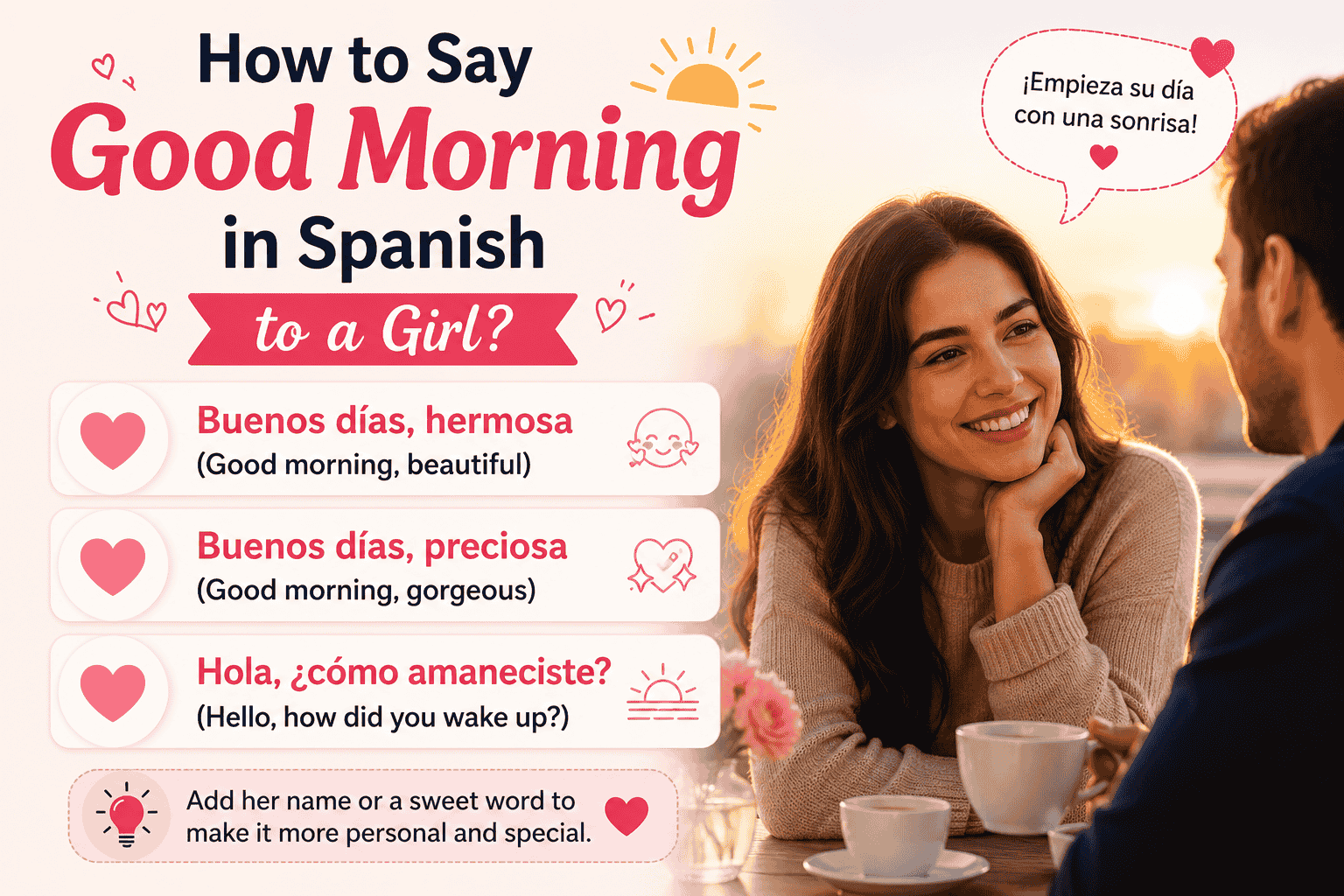
Saying good morning in Spanish to a girl is a thoughtful way to greet someone with warmth and respect. Whether you’re talking to a friend, girlfriend, classmate, or someone you’ve just met, choosing the right phrase can help create a positive impression. In Spanish, greetings can range from formal to affectionate, depending on your relationship with the person.
If you’re learning Spanish, mastering simple greetings is one of the easiest ways to improve your communication skills.
How Do You Say Good Morning in Spanish?
To say good morning in Spanish, the most common and widely accepted phrase is buenos días. You may also hear variations like buen día in some Spanish-speaking regions or the casual greeting ¡buenas!, which can be used informally throughout the day.
Spanish Word: Buenos días
Translation: Good morning
This phrase is used throughout the Spanish-speaking world and works in both formal and informal situations.
How to Say Good Morning in Spanish to a Girl
The phrase Buenos días is suitable for girls of all ages. However, you can make your greeting sound more personal and affectionate by adding the person’s name or a term of endearment.
| Spanish Phrase | English Meaning | Best Used For |
| Buenos días | Good morning | General greeting |
| Buenos días, hermosa | Good morning, beautiful | Girlfriend or partner |
| Buenos días, preciosa | Good morning, gorgeous | Romantic relationship |
| Buenos días, linda | Good morning, lovely | Someone close to you |
| Buenos días, amiga | Good morning, friend | Female friend |
| Buenos días, mi amor | Good morning, my love | Partner or spouse |
Formal vs. Informal Greetings
Use the appropriate greeting depending on your relationship.
| Situation | Recommended Greeting |
| Teacher or colleague | Buenos días |
| Female friend | Buenos días, amiga |
| Girlfriend | Buenos días, hermosa |
| Wife or partner | Buenos días, mi amor |
| Someone you just met | Buenos días |
Other Cute Good Morning Messages in Spanish
If you want your greeting to sound sweeter, try these examples:
- Buenos días, hermosa. Espero que tengas un día maravilloso.
Good morning, beautiful. I hope you have a wonderful day. - Buenos días, mi amor. Que tengas un día lleno de felicidad.
Good morning, my love. Have a day full of happiness. - Buenos días, linda. Siempre es un placer hablar contigo.
Good morning, lovely. It’s always a pleasure talking to you.
Common Mistakes to Avoid
When learning Spanish greetings, avoid these common errors:
- Don’t translate “Good morning” word for word.
- Use Buenos días, not Bueno día.
- Save affectionate terms like mi amor or hermosa for someone you’re close to.
- Use a formal greeting when speaking with someone you don’t know well.
Tips for Sounding More Natural
To make your Spanish greetings sound authentic:
- Smile while speaking.
- Pronounce Buenos días clearly.
- Match your greeting to the situation.
- Practice with native speakers or use the best language exchange apps to improve your pronunciation and confidence.
Be Aware: How to Learn a Language
Be Aware: Common Greetings English Language
Be Aware: Hardest Languages to Learn
Frequently Asked Questions
How do you say good morning in Spanish?
The most common greeting is Buenos días, which means Good morning.
Can I say “Buenos días, hermosa” to a girl?
Yes. It means Good morning, beautiful, but it should only be used with someone you’re close to, such as a girlfriend or partner.
Is “Buenos días” formal or informal?
Buenos días works in both formal and informal conversations, making it the safest and most commonly used morning greeting.
What is a friendly way to say good morning to a female friend?
You can say Buenos días, amiga or simply Buenos días.
Final Thoughts
Learning how to say good morning in Spanish to a girl is simple once you understand the context. Buenos días is the standard greeting and is appropriate in nearly every situation. If you’re greeting someone close to you, adding words like hermosa, linda, or mi amor can make your message more personal. With regular practice and conversations, you’ll become more comfortable using these greetings naturally.
