
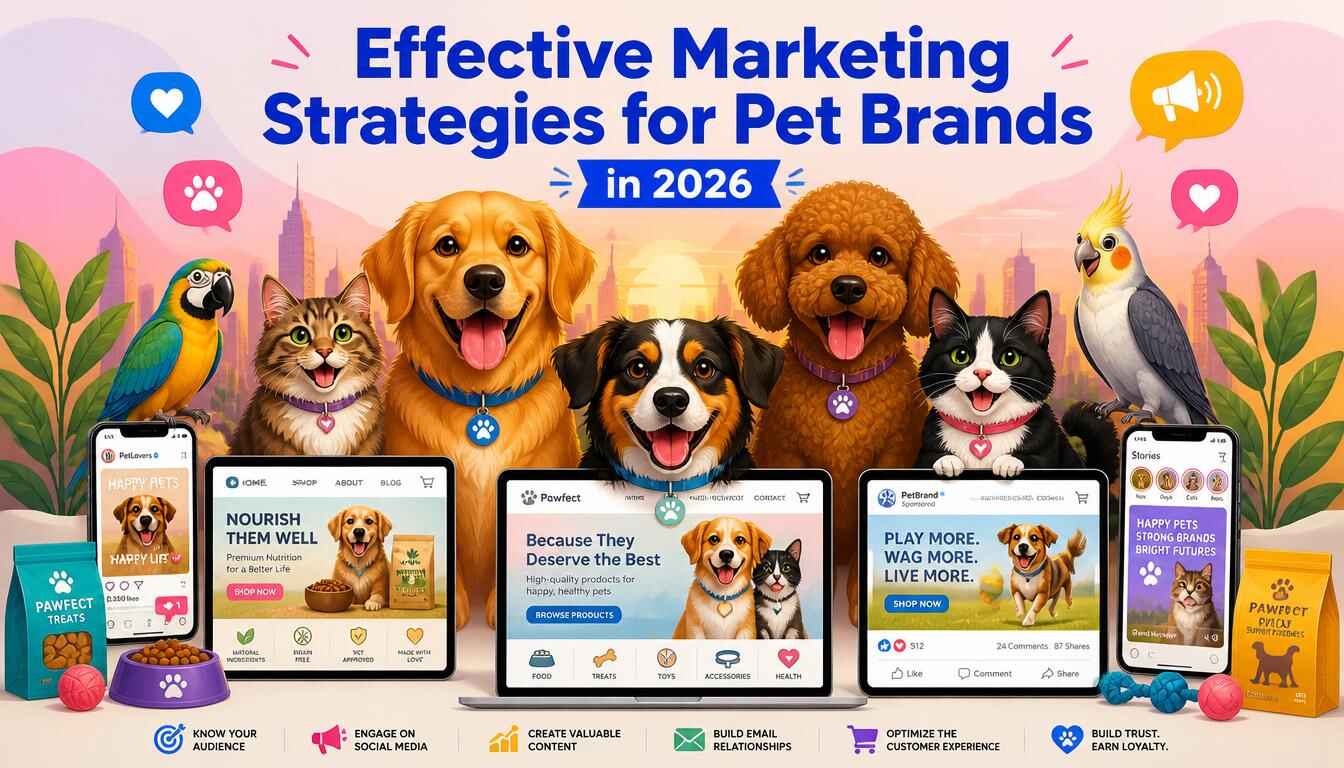
The pet industry continues to evolve as consumer behavior, technology, and digital marketing trends reshape how brands connect with pet owners. In 2026, successful pet brands are focusing on personalized experiences, community engagement, and data-driven campaigns to build trust and drive sales.
This guide explores the most effective marketing strategies for pet brands in 2026 and how businesses can stay ahead in a competitive market.
Understand Modern Pet Owners
Today’s pet owners consider their pets as members of their family. They actively research products, read reviews, and seek brands that align with their values.
To attract and retain customers, pet brands should:
- Focus on pet health and well-being
- Communicate product benefits clearly
- Showcase transparency in sourcing and manufacturing
- Create educational content that helps pet owners make informed decisions
Understanding customer needs allows brands to develop more relevant marketing campaigns and stronger customer relationships.
Invest in Content Marketing
Content marketing remains one of the most effective ways to attract organic traffic and establish authority.
Pet brands should create:
- Product guides
- Pet care tips
- Breed-specific resources
- Training advice
- Nutrition-related content
Helpful content not only improves search visibility but also positions the brand as a trusted source of information.
Optimize for Search Engines
Search engine optimization remains essential for sustainable growth.
Pet brands should focus on:
- High-quality content creation
- Keyword research for SEO
- Fast website performance
- Mobile-friendly design
- Strong internal linking
For example, a pet-focused platform such as Cloudpaws can benefit from publishing educational resources that answer common pet owner questions while improving organic visibility.
Leverage Short Video Content
Pet-related content naturally performs well because it is engaging, emotional, and highly shareable.
Brands can create videos that feature:
- Product demonstrations
- Customer testimonials
- Pet transformations
- Behind-the-scenes content
- Expert pet care advice
Consistent video publishing can significantly increase reach and engagement.
Partner with Pet Influencers
Influencer marketing remains a powerful strategy for pet brands. Micro-influencers often generate higher engagement rates and stronger audience trust than larger creators.
When selecting influencers:
- Prioritize audience relevance
- Review engagement quality
- Focus on authenticity
- Track campaign performance
Authentic partnerships can improve brand awareness and drive conversions.
Build a Strong Community
Community-driven marketing helps create long-term customer loyalty.
Pet brands can build communities through:
- Social media groups
- Online forums
- User-generated content campaigns
- Customer contests
- Loyalty programs
Encouraging customers to share their experiences creates social proof and strengthens brand credibility.
Personalize Customer Experiences
Personalization is becoming a key competitive advantage.
Brands can personalize marketing by:
- Recommending products based on pet type
- Sending targeted email campaigns
- Offering customized promotions
- Using behavioral data to improve customer journeys
A personalized approach increases engagement and customer retention.
Encourage User-Generated Content
User-generated content helps build trust by showcasing real customer experiences.
Effective tactics include:
- Customer photo submissions
- Product review campaigns
- Social media challenges
- Community spotlights
Potential buyers often trust customer content more than traditional advertising.
Use Email Marketing for Retention
Email marketing continues to deliver strong returns when used strategically.
Pet brands can send:
- Product recommendations
- Educational newsletters
- Special promotions
- Reorder reminders
- Seasonal pet care tips
Regular communication keeps customers engaged and encourages repeat purchases.
Monitor Data and Performance on a Daily Basis
Successful marketing decisions should be based on data.
Key metrics to track include:
- Website traffic
- Conversion rates
- Customer acquisition costs
- Email engagement
- Social media performance
Regular analysis helps identify opportunities and improve campaign effectiveness.
