
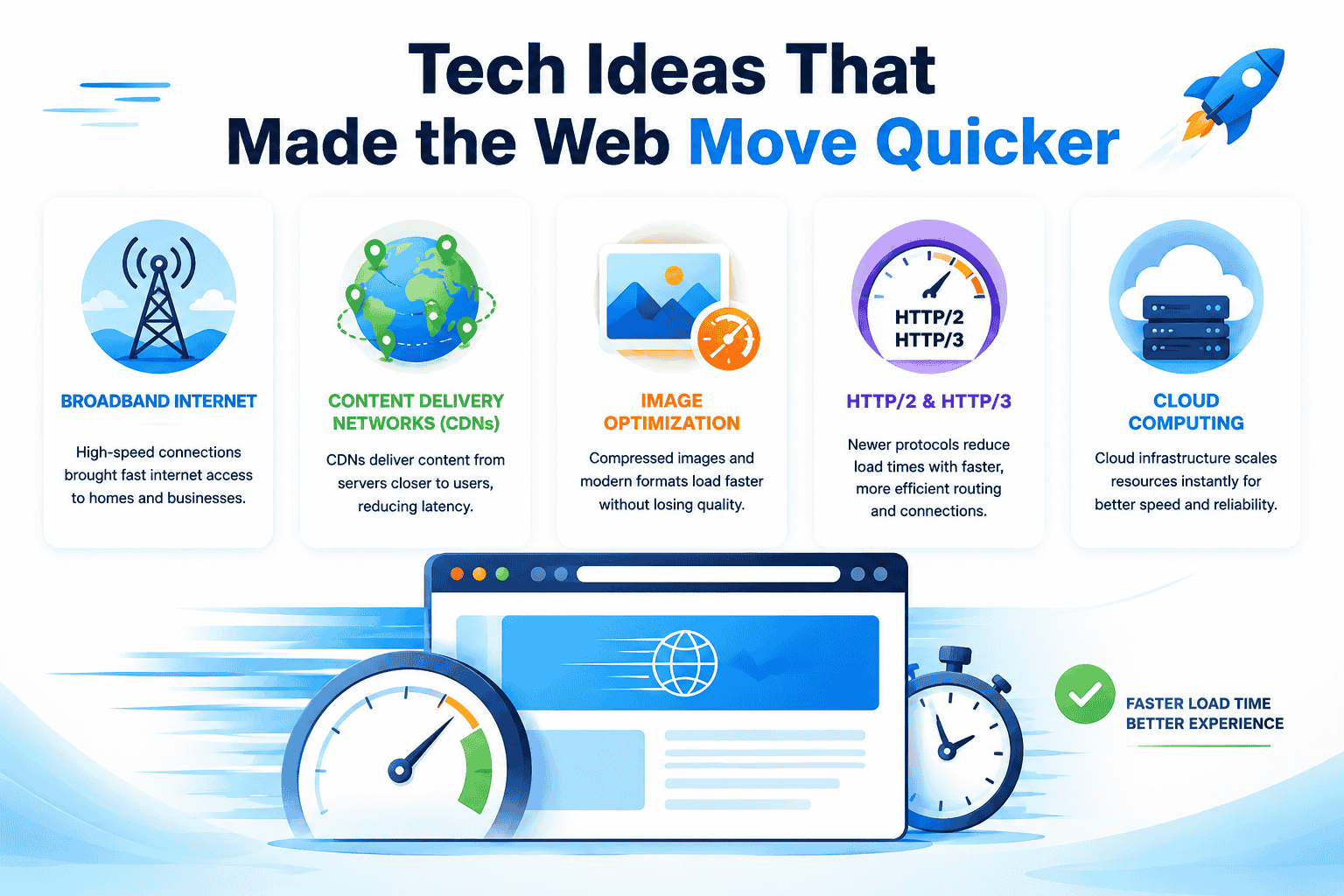
Tech Ideas That Made the Web Move Quicker
The internet has transformed from slow-loading static pages into a fast, interactive platform capable of streaming videos, running web applications, and supporting billions of users simultaneously. This progress didn’t happen by chance. It was driven by several technological innovations that improved speed, reliability, and user experience.
This article explores the tech ideas that made the web move quicker and explains why these innovations continue to shape today’s internet.
Why Web Speed Matters
A faster web benefits everyone. Users expect websites to load almost instantly, while businesses rely on speed to improve customer satisfaction, search engine rankings, and conversions.
Key benefits of a faster web include:
- Better user experience
- Higher search engine visibility
- Lower bounce rates
- Improved online sales and engagement
- Reduced server resource usage
Timeline of Major Web Speed Innovations
| Technology | Primary Purpose | Impact on Web Performance |
| Broadband Internet | Faster internet access | Reduced loading times |
| Content Delivery Networks (CDNs) | Deliver content from nearby servers | Lower latency |
| Browser Caching | Store website files locally | Faster repeat visits |
| Image Compression | Reduce file sizes | Faster page rendering |
| HTTP/2 & HTTP/3 | Faster communication protocols | Improved loading efficiency |
| Cloud Computing | Scalable hosting infrastructure | Better reliability and speed |
| Lazy Loading | Load content only when needed | Reduced initial page size |
| Progressive Web Apps (PWAs) | App-like web experience | Faster and smoother interactions |
Broadband Internet Changed Everything
The shift from dial-up connections to broadband marked one of the biggest improvements in internet speed.
Broadband provided:
- Continuous internet access
- Higher download speeds
- Faster uploads
- Better streaming and online communication
This foundation allowed developers to build richer websites without being limited by extremely slow connections.
Content Delivery Networks (CDNs)
A Content Delivery Network stores copies of website files across multiple servers worldwide.
Instead of loading content from a single server, visitors receive files from the closest available location. By delivering content from nearby servers, CDNs minimize data travel distance and dramatically improve website loading speed.
CDNs are especially valuable for websites with international audiences.
Browser Caching
Browser caching allows frequently used files such as images, CSS, and JavaScript to be stored on a user’s device.
When visitors return, the browser loads these files locally instead of downloading them again.
Benefits include:
- Faster page loading
- Reduced bandwidth usage
- Lower server load
Image Optimization
Images are typically the largest files on a webpage, making them a major factor in loading speed.
Modern optimization techniques include:
- Using WebP or AVIF formats
- Compressing images without noticeable quality loss
- Serving responsive image sizes
- Lazy loading below-the-fold images
Smaller image files help pages load much faster, especially on mobile devices.
HTTP/2 and HTTP/3
Older versions of HTTP handled requests one at a time, creating delays.
HTTP/2 introduced:
- Multiplexing
- Header compression
- Server push
HTTP/3 further improved performance by using the QUIC protocol, reducing connection delays and improving performance on unstable networks.
Cloud Computing
Cloud hosting replaced many traditional servers with scalable infrastructure capable of handling traffic spikes efficiently.
Advantages include:
- Automatic scaling
- Faster global deployment
- Improved uptime
- Better resource allocation
Cloud platforms also make it easier to deliver content quickly across different regions.
Lazy Loading
Lazy loading delays the download of images, videos, and other media until users actually scroll near them.
This approach reduces initial page size and helps important content appear much faster.
It is now widely supported by modern browsers.
Progressive Web Apps (PWAs)
Progressive Web Apps (PWAs) combine the speed and accessibility of websites with the functionality and user experience of mobile applications.
PWAs provide:
- Offline access
- Fast loading
- Push notifications
- Home screen installation
- Smooth user experience
Many businesses use PWAs to improve website performance without developing separate mobile apps.
Smarter Front-End Development
Modern web development frameworks, combined with advanced optimization techniques, help websites load faster and perform more efficiently.
Common improvements include:
- Code minification
- JavaScript bundling
- CSS optimization
- Tree shaking
- Efficient rendering techniques
These practices reduce unnecessary downloads and improve responsiveness.
Artificial Intelligence in Performance Optimization
AI now helps developers monitor website performance and automatically identify bottlenecks.
Modern optimization tools can:
- Detect slow pages
- Recommend performance improvements
- Optimize caching strategies
- Compress assets intelligently
This makes maintaining high-speed websites easier than ever.
Mobile-First Optimization
Since most users browse on smartphones, developers now prioritize mobile performance.
Common mobile optimizations include:
- Responsive layouts
- Smaller media files
- Faster touch interactions
- Reduced JavaScript execution
- Optimized fonts
These improvements ensure websites remain fast across different devices and are also best for search engine optimization.
Faster Web Technologies Benefit Every Industry
Nearly every online service depends on fast web performance.
Examples include:
- E-commerce platforms
- Online education
- Banking services
- Healthcare portals
- Streaming platforms
- Remote collaboration tools
Even educational resources, including guides that review the best language exchange apps, benefit from faster-loading pages that improve accessibility for users worldwide.
Best Practices for Keeping Websites Fast
To maintain excellent performance:
- Optimize images before uploading.
- Enable browser caching.
- Use a reliable CDN.
- Minify CSS and JavaScript files.
- Reduce unnecessary plugins and scripts.
- Choose high-performance hosting.
- Monitor Core Web Vitals regularly.
Conclusion
The tech ideas that made the web move quicker have transformed the internet into a faster, more reliable platform for communication, learning, business, and entertainment. Innovations such as broadband internet, CDNs, browser caching, HTTP/3, cloud computing, lazy loading, and Progressive Web Apps continue to improve how websites perform.
As technology advances, developers will keep introducing smarter optimization techniques that deliver even faster experiences while supporting the growing demands of modern web users.
