
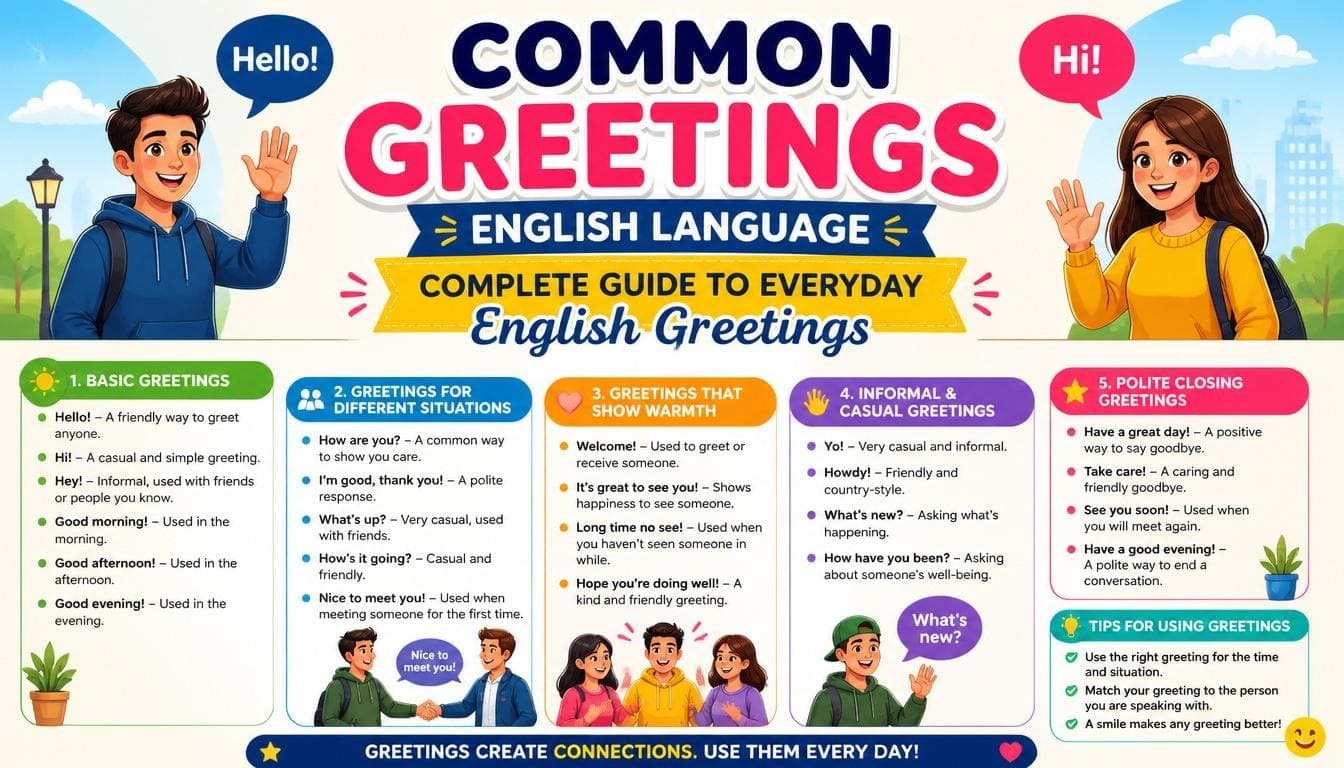
English greetings are one of the most important parts of communication. Whether we are meeting someone for the first time, talking to friends, speaking in a professional environment, or chatting online, greetings help us create positive conversations. Learning common greetings English language phrases improves confidence, communication skills, and fluency in daily life.
In this detailed guide, we will explore the most common English greetings, formal and informal expressions, professional greetings, regional variations, greetings for different times of day, and practical examples to naturally improve spoken English.
Why Greetings Are Important in English Communication
Greetings are more than simple words. They create first impressions and help build strong relationships. In English-speaking cultures, greeting people politely is considered respectful and friendly.
Using proper greetings helps us:
- Start conversations naturally
- Sound more fluent in English
- Build confidence while speaking
- Improve social and professional communication
- Make interactions comfortable and positive
People who master greetings often communicate more effectively in workplaces, schools, interviews, meetings, travel situations, and social events.
Most Common Greetings in English Language
Below are the most widely used English greetings for everyday communication.
Hello
Hello is the most universal English greeting. It works in almost every situation, whether formal or informal.
Examples:
- Hello, how are you?
- Hello everyone.
- Hello, nice to meet you.
This greeting is commonly used in:
- Phone calls
- Offices
- Schools
- Public places
- Customer service conversations
Hi
Hi is a casual and friendly greeting used among friends, classmates, coworkers, and family members.
Examples:
- Hi John!
- Hi, what’s going on?
- Hi everyone.
It sounds more relaxed than “hello” and is extremely common in daily English conversations.
Hey
Hey is very informal and popular among younger English speakers.
Examples:
- Hey, how’s it going?
- Hey buddy!
- Hey, long time no see.
This greeting is best used with friends and people we know well.
Greetings Based on Time of Day
English greetings often change with the time of day.
Good Morning
Used from early morning until around noon.
Examples:
- Good morning, sir.
- Good morning everyone.
- Good morning, how are you today?
This greeting is common in:
- Offices
- Schools
- Professional meetings
- Formal conversations
Good Afternoon
Used after noon until evening.
Examples:
- Good afternoon, everyone.
- Good afternoon, ma’am.
- Good afternoon, how may I help you?
This greeting sounds polite and professional.
Good Evening
Used during evening hours.
Examples:
- Good evening, ladies and gentlemen.
- Good evening, nice to see you.
- Good evening everyone.
This greeting is common at:
- Events
- Restaurants
- Meetings
- Formal gatherings
Good Night
Unlike other greetings, good night is usually used when leaving or going to sleep.
Examples:
- Good night, see you tomorrow.
- Good night everyone.
- Good night and take care.
Formal Greetings in English
Formal greetings are important in professional and respectful situations.
How Do You Do?
This is a very formal traditional greeting.
Example:
- How do you do, Mr. Smith?
Although less common today, it is still used in highly formal introductions.
Nice to Meet You
Used when meeting someone for the first time.
Examples:
- Nice to meet you.
- It’s nice to meet you.
- Pleased to meet you.
These greetings are polite and professional.
How Are You?
One of the most popular English greetings worldwide.
Common Responses:
- I’m fine, thank you.
- I’m doing well.
- Pretty good.
- Great, thanks.
This greeting works in both casual and formal situations.
Informal English Greetings
Informal greetings are common among friends and close connections.
What’s Up?
A casual greeting asking how someone is doing.
Responses:
- Not much.
- Just relaxing.
- Everything’s good.
How’s It Going?
Very common in American English.
Responses:
- It’s going well.
- Pretty good.
- Can’t complain.
Long Time No See
Used when meeting someone after a long period.
Example:
- Hey Sarah, long time no see!
This greeting sounds warm and friendly.
Professional Greetings in English
Professional greetings help create respectful workplace communication.
Welcome
Used when greeting guests, customers, or new employees.
Examples:
- Welcome to our office.
- Welcome everyone.
- Welcome aboard.
It’s a Pleasure to Meet You
A professional and respectful greeting.
Example:
- It’s a pleasure to meet you, Mr. Johnson.
Hope You’re Doing Well
Frequently used in emails and business communication.
Example:
- Hope you’re doing well today.
This greeting sounds polite and professional without being overly formal.
English Greetings for Phone Calls
Phone greetings are slightly different from face-to-face greetings.
Hello, This Is…
Examples:
- Hello, this is David speaking.
- Hello, this is customer support.
May I Speak To…
Example:
- May I speak to Mr. Adams?
This greeting is common in professional calls.
Thanks for Calling
Used in customer service and business communication.
Example:
- Thanks for calling our company.
Popular Slang Greetings in English
Modern English includes many slang greetings used in casual conversations.
Yo
Very informal and mostly used among friends.
Example:
- Yo, what’s up?
Sup
Short form of “What’s up?”
Example:
- Sup bro?
Howdy
Popular in some regions, especially parts of the United States.
Example:
- Howdy partner!
Greetings Used Around the World in English
English speakers from different countries may use different greeting styles.
British English Greetings
Common examples:
- You alright?
- Cheers
- Morning!
In the UK, “You alright?” often means “How are you?”
American English Greetings
Popular phrases include:
- What’s up?
- Hey there
- How’s it going?
American greetings are often casual and friendly.
Australian English Greetings
Australians commonly say:
- G’day
- How ya going?
These greetings are relaxed and informal.
Best Ways to Practice English Greetings
Improving greetings requires regular practice.
Practice Daily Conversations
Speak with:
- Friends
- Teachers
- Language partners
- Online communities
Watch English Movies and Shows
Movies help us understand:
- Pronunciation
- Tone
- Informal greetings
- Real-life conversations
Use Language Learning Apps
Many learners improve their speaking skills through conversation platforms and the best language exchange apps available online.
Final Remarks
Learning common greetings English language expressions is essential for effective communication. Greetings help create strong first impressions, improve fluency, and make conversations more natural. From simple phrases like “Hello” and “Hi” to professional greetings used in workplaces, mastering these expressions builds confidence in speaking English.
Regular practice, listening to native speakers, and using greetings in daily conversations can significantly improve communication skills. Whether we are speaking casually with friends or professionally in meetings, the right greeting always creates a positive connection.
By understanding formal greetings, informal expressions, slang phrases, and professional communication styles, we become more comfortable and fluent in real-life English conversations.
Frequently Asked Questions (FAQs)
What is the most common greeting in English?
The most common greeting is “Hello” because it works in both formal and informal situations.
What is the difference between “Hi” and “Hello”?
“Hi” is more casual, while “Hello” is slightly more formal and universal.
Is “Hey” formal or informal?
“Hey” is informal and mainly used among friends or close acquaintances.
How do professionals greet in English?
Professionals commonly use greetings like:
- Good morning
- Nice to meet you
- Hope you’re doing well
Why are greetings important in communication?
Greetings help create positive first impressions, build relationships, and start conversations politely.
