
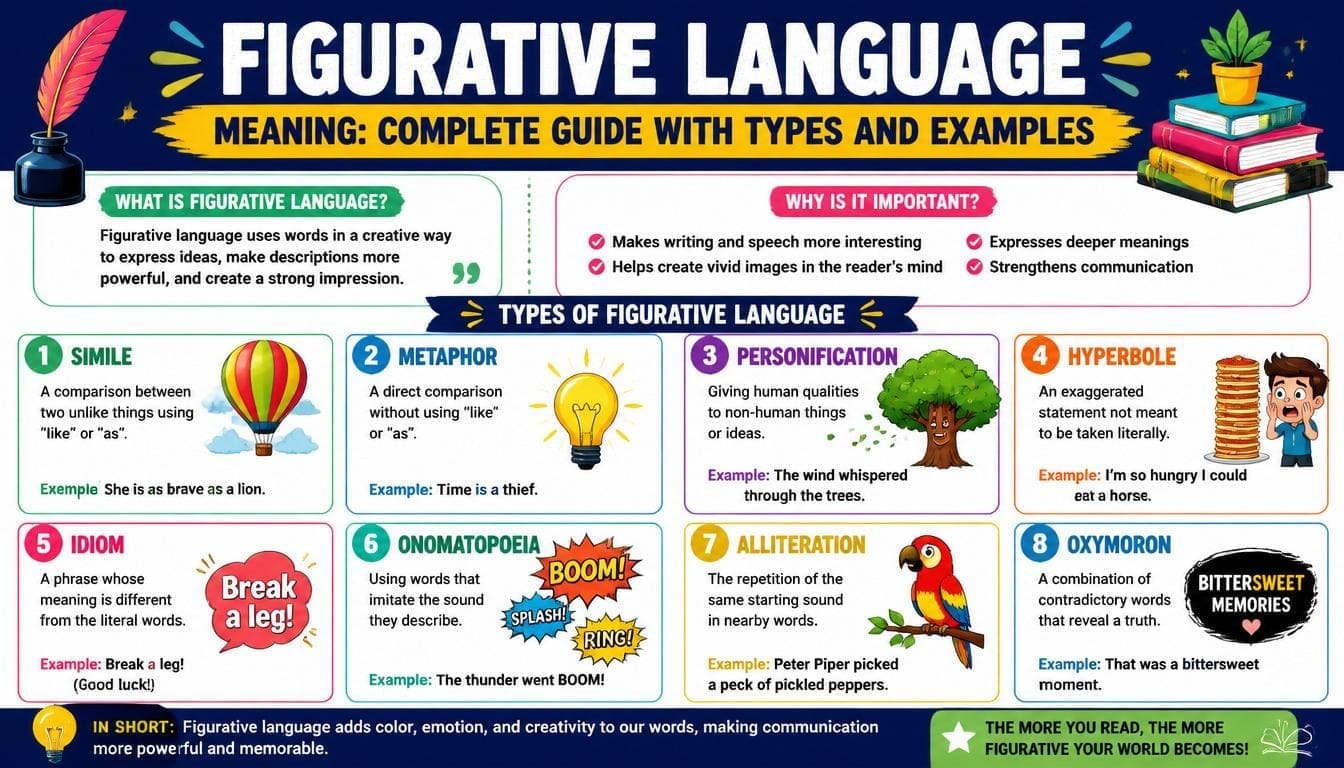
Understanding figurative language meaning is essential for improving reading, writing, and communication skills. Figurative language makes writing more expressive, emotional, and creative by using words beyond their literal meanings. Writers, poets, teachers, and speakers use figurative expressions to create stronger imagery and a deeper understanding.
From literature and poetry to daily conversations and social media, figurative language appears everywhere. Learning how it works helps readers better interpret texts and helps writers communicate ideas more effectively.
In this complete guide, we will explain the meaning of figurative language, its importance, major types, practical examples, and how to identify it easily.
What Is Figurative Language Meaning?
Figurative language is the use of words or phrases in a non-literal way to create vivid imagery, express emotions, make comparisons, or emphasize ideas. Rather than communicating the message directly, it uses creative, imaginative expressions to help readers better visualize and understand it.
For example:
- “The classroom was a zoo.”
This sentence does not literally mean animals were inside the classroom. It means the classroom was noisy and chaotic.
Figurative language helps writers:
- Add creativity to writing
- Create emotional impact
- Improve storytelling
- Make ideas memorable
- Build strong imagery
It is commonly used in:
- Poetry
- Novels
- Songs
- Speeches
- Advertisements
- Everyday conversations
Why Figurative Language Is Important
Figurative language improves communication by making content more engaging and descriptive. Instead of plain writing, it allows readers to visualize situations and connect emotionally with the message.
Benefits of Figurative Language
Makes Writing More Interesting
Creative expressions capture attention and make content enjoyable to read.
Creates Strong Imagery
Readers can picture scenes more clearly through comparisons and descriptive phrases.
Adds Emotional Depth
Figurative language helps express feelings more powerfully.
Improves Understanding
Complex ideas become easier to understand when they are explained through comparisons and symbolic representations.
Enhances Storytelling
Stories become more vivid and memorable when figurative expressions are used effectively.
Main Types of Figurative Language
There are several important types of figurative language used in English.
Simile
A simile compares two different things using words like “as” or “like.”
Examples of Simile
- Her smile was as bright as the sun.
- He runs like the wind.
- The baby slept like a log.
Similes help readers understand descriptions by comparing them to familiar ideas, making the meaning clearer and easier to visualize.
Metaphor
A metaphor compares two things without using “as” or “like.”
Examples of Metaphor
- Time is money.
- The world is a stage.
- Her voice is music to my ears.
Metaphors make writing more powerful and imaginative.
Personification
Personification gives human qualities to objects, ideas and animals.
Examples of Personification
- The wind whispered through the trees.
- The flowers danced in the rain.
- The alarm clock screamed at me.
This type of figurative language creates vivid imagery and emotional connection.
Hyperbole
Hyperbole is a figure of speech that intentionally exaggerates to create emphasis, add dramatic effect, or make a statement more impactful.
Examples of Hyperbole
- I’ve told you a million times.
- This bag weighs a ton.
- I’m so hungry I could eat a horse.
Hyperbole is commonly used in casual conversations and advertisements.
Alliteration
Alliteration occurs when nearby words begin with the same sound.
Examples of Alliteration
- Peter Piper picked peppers.
- Wild winds whistled loudly.
- Busy bees buzzed brightly.
Alliteration improves rhythm and makes phrases memorable.
Onomatopoeia
Onomatopoeia refers to words that imitate natural sounds.
Examples of Onomatopoeia
- Buzz
- Bang
- Splash
- Tick-tock
These words make writing more lively and realistic.
Idiom
An idiom is a phrase with a meaning different from the literal meaning of its words.
Examples of Idioms
- Break the ice
- Hit the books
- Piece of cake
Idioms are very common in spoken English and informal writing.
Symbolism
Symbolism uses symbols to represent deeper meanings or ideas.
Examples of Symbolism
- A dove symbolizes peace.
- Red roses symbolize love.
- Dark clouds symbolize sadness.
Writers often use symbolism in literature and poetry to communicate hidden messages.
Oxymoron
An oxymoron combines opposite words.
Examples of Oxymoron
- Deafening silence
- Bitter sweet
- Living dead
Oxymorons create dramatic and thought-provoking expressions.
Irony
Irony occurs when the actual meaning is different from what is expected.
Examples of Irony
- A fire station burns down.
- A traffic officer gets a parking ticket.
- A dentist has bad teeth.
Irony adds humor or deeper meaning to writing.
Difference Between Literal and Figurative Language
Understanding the difference helps improve comprehension skills.
| Literal Language | Figurative Language |
| Means exactly what it says | Uses creative or symbolic meaning |
| Direct communication | Imaginative communication |
| Simple descriptions | Expressive descriptions |
| “It is raining heavily.” | “It’s raining cats and dogs.” |
Literal language focuses on facts, while figurative language focuses on creativity and emotional effect.
How Students Can Improve Figurative Language Skills
Learning figurative language requires reading, practice, and observation.
Read Books and Poetry
Literature naturally exposes readers to a variety of figurative expressions.
Practice Writing
Writing stories, poems, and descriptions improves creativity.
Watch Movies and Songs
Movies and music frequently use metaphors, idioms, and symbolism.
Learn English Through Conversation
Many learners also improve their understanding through the best language exchange apps that allow real-time communication with native speakers.
Additionally
Understanding figurative language meaning is important for anyone learning English, improving writing skills, or studying literature. Figurative language adds creativity, emotion, and vivid imagery to communication. From similes and metaphors to symbolism and irony, these techniques make writing more engaging and impactful.
Whether used in books, poems, conversations, songs, or advertising, figurative language helps communicate ideas beyond literal meanings. By practicing regularly and recognizing different figurative expressions, readers and writers can improve both comprehension and creativity.
Mastering figurative language not only strengthens language skills but also makes communication more expressive, natural, and memorable.
Frequently Asked Questions
What is figurative language in simple words?
Figurative language uses words creatively instead of literally to create imagery, emotion, or deeper meaning.
What are the main types of figurative language?
The main types include:
- Simile
- Metaphor
- Personification
- Hyperbole
- Idiom
- Symbolism
- Irony
Why is figurative language important?
It makes writing more expressive, engaging, emotional, and memorable.
Where is figurative language commonly used?
It is used in:
- Literature
- Poetry
- Songs
- Movies
- Advertisements
- Daily conversations
How can students improve figurative language skills?
Students can improve by reading books, practicing writing, learning idioms, and observing figurative expressions in conversations and media.
