
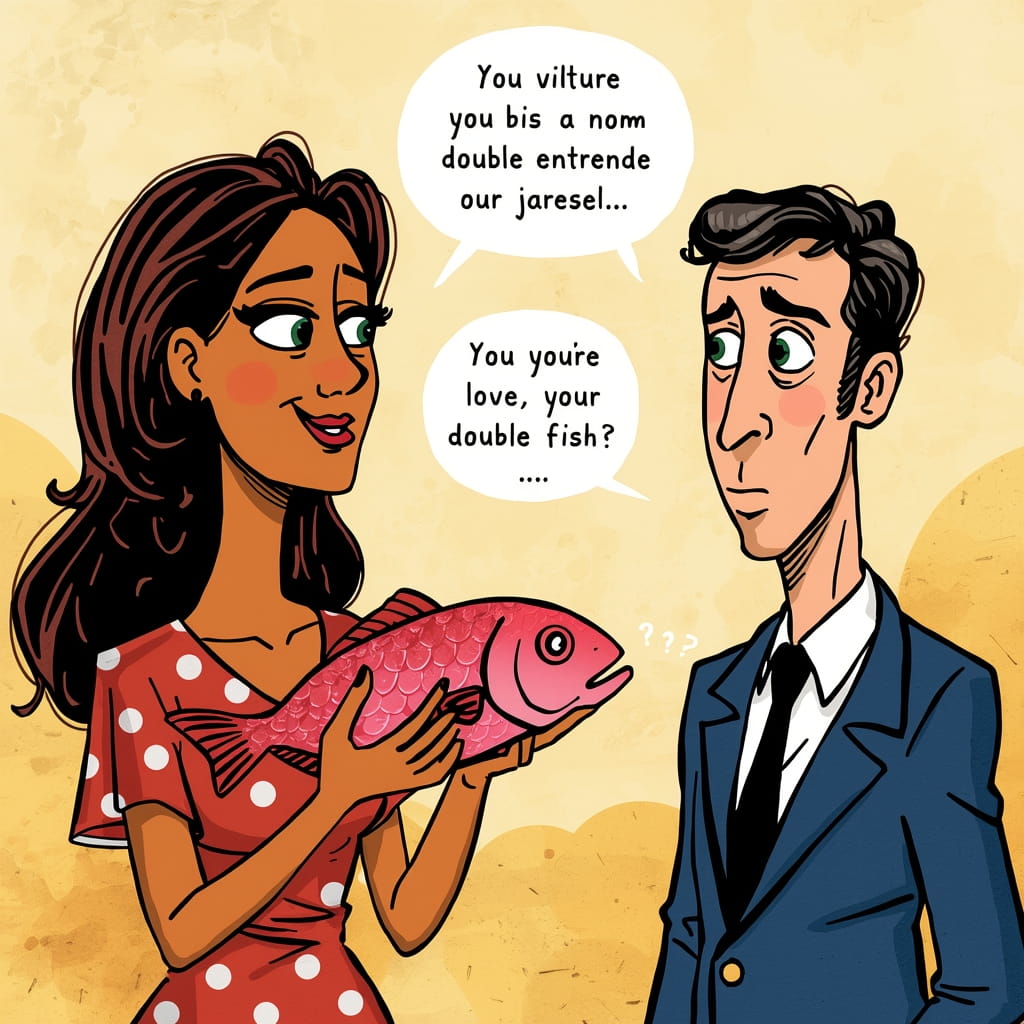
Language is powerful not only because of what it says directly, but also because of what it suggests indirectly. Among the most fascinating tools in rhetoric and creative writing is the double entendre, a phrase or expression that conveys two meanings at once. One meaning is often straightforward and innocent, while the second may be humorous, ironic, or subtly provocative.
In this comprehensive guide, we explore what a double entendre is, how it works, where it is used, and why it remains one of the most enduring literary and conversational devices in the English language.
What Is a Double Entendre? Definition and Core Meaning
A double entendre is a figure of speech in which a word, phrase, or sentence has two interpretations. Typically:
- The first meaning is obvious and socially acceptable.
- The second meaning is implied, indirect, or sometimes risqué.
The term originates from French, meaning “double meaning.” In English usage, it refers specifically to expressions designed intentionally to be interpreted in two ways.
Simple Double Entendre Definition
A double entendre is a deliberate use of ambiguity that allows a phrase to be understood in more than one way, often with humorous or suggestive intent.
How a Double Entendre Works
The effectiveness of a double entendre depends on ambiguity, context, and wordplay. It works because English words often have multiple meanings, and syntax can create layered interpretations.
Consider this example:
“She’s got a great pair of lungs.”
Literal meaning: She sings loudly or powerfully.
Implied meaning: A reference to physical attributes.
The sentence remains grammatically correct and harmless at first glance. However, the second interpretation depends on cultural context and listener awareness.
Key Characteristics of a Double Entendre
A true double entendre usually contains the following features:
- Intentional ambiguity
- Dual interpretation
- Context-dependent meaning
- Often humor or innuendo
- Clever wordplay
Unlike accidental ambiguity, a double entendre is crafted deliberately.
Types of Double Entendre
Not all double entendres are suggestive. They can appear in different forms across literature, conversation, and media.
1. Innocent Double Entendre
These are playful and humorous without being inappropriate.
Example:
“I used to be a baker, but I couldn’t make enough dough.”
Meaning 1: Not enough money.
Meaning 2: Not enough bread dough.
This relies on the dual meaning of the word “dough.”
2. Suggestive Double Entendre
This type implies a secondary meaning that may be flirtatious or mildly provocative.
Example:
“That’s a hard one to swallow.”
Literal meaning: Difficult situation.
Implied meaning: Suggestive interpretation depending on context.
3. Literary Double Entendre
Writers often use layered meanings to deepen narrative complexity. In classic literature, authors such as William Shakespeare frequently used double entendre for humor and social commentary. In plays like Romeo and Juliet, characters use wordplay that operates on multiple levels, entertaining audiences while adding subtext.
Double Entendre vs. Other Literary Devices
Understanding what a double entendre is becomes clearer when compared with related concepts.
| Device | Definition | Similarity | Difference |
| Double Entendre | Phrase with two meanings | Uses ambiguity | Usually intentional and layered |
| Pun | Wordplay based on similar sounds | Humor-based | Often simpler and more direct |
| Irony | Opposite meaning intended | Indirect meaning | Not necessarily dual interpretation |
| Euphemism | Mild term replacing harsh one | Indirect | No dual layered humor |
Examples of Double Entendre in Everyday Language
Double entendre is not limited to literature. It appears regularly in conversation, advertising, and entertainment.
Example 1:
“Let’s meet for a quickie.”
Meaning 1: Quick meeting.
Meaning 2: Suggestive implication.
Example 2:
“He’s well-hung.”
Meaning 1: Properly dressed or decorated.
Meaning 2: Suggestive interpretation.
Example 3:
“I’m reading between the lines.”
Meaning 1: Analyzing deeper meaning.
Meaning 2: Subtle implication about hidden motives.
Double Entendre in Literature
Writers use double entendre to:
- Add humor
- Avoid censorship
- Communicate taboo subjects indirectly
- Engage sophisticated readers
In Renaissance drama, especially in the works of Geoffrey Chaucer and Shakespeare, double entendre was a powerful stylistic tool.
These authors layered dialogue with clever ambiguity, entertaining both common audiences and intellectual elites simultaneously.
Double Entendre in Music and Pop Culture
Modern artists frequently use double entendre in lyrics.
For instance, hip-hop and pop songs often contain lines that operate on both literal and metaphorical levels. This allows musicians to communicate themes of ambition, relationships, or desire without explicit statements.
Double meanings in songs help maintain artistic creativity while engaging listeners who enjoy decoding layered messages.
Chart: Structure of a Double Entendre
Below is a simple structural breakdown showing how double entendre functions:
| Component | Surface Meaning | Hidden Meaning |
| Word Choice | Neutral phrase | Suggestive implication |
| Context | Everyday situation | Social or cultural cue |
| Audience Awareness | Basic interpretation | Advanced understanding |
| Tone | Casual or humorous | Playful or provocative |
This layered structure explains why double entendre is so effective.
Why Writers Use Double Entendre
Writers and speakers use double entendre for several strategic reasons:
1. Humor
Ambiguity creates surprise, which triggers laughter.
2. Subtle Criticism
Writers can criticize authority indirectly.
3. Romantic or Flirtatious Tone
Layered language creates intrigue.
4. Avoiding Directness
Sensitive topics can be expressed indirectly.
5. Audience Engagement
It invites readers to think deeper.
Psychology Behind Double Entendre
The human brain enjoys solving puzzles. When a listener recognizes the second meaning of a phrase, it creates a sense of satisfaction.
This psychological engagement increases memorability. That is why advertisers and comedians rely heavily on double meanings.
Double Entendre in Advertising
Brands use clever phrasing to create memorable slogans.
Example:
“Size matters.”
Depending on context, this can refer to product dimensions or carry humorous undertones. Advertisers use double entendre to grab attention without violating advertising standards.
Is Double Entendre Always Inappropriate?
No. While many double entendres are suggestive, they are not inherently vulgar. Many are simply clever uses of language.
Context determines appropriateness. In academic writing, subtle double meanings may enrich interpretation. In casual settings, they may enhance humor.
How to Identify a Double Entendre
To recognize one, ask:
- Does the phrase have more than one meaning?
- Is the second meaning implied rather than stated?
- Is ambiguity intentional?
- Does context support dual interpretation?
If yes, you are likely dealing with a double entendre.
How to Use Double Entendre in Writing
To craft an effective double entendre:
- Choose words with multiple meanings.
- Structure sentences carefully.
- Ensure both meanings make sense.
- Avoid forced ambiguity.
- Keep the tone consistent.
Subtlety is key. Overly obvious double meanings lose sophistication.
Common Mistakes When Using Double Entendre
- Making it too explicit.
- Creating confusion rather than cleverness.
- Using inappropriate language for the audience.
- Forcing dual meanings unnaturally.
The goal is elegance, not awkwardness.
Double Entendre in Comedy
Comedians often rely on layered jokes. The surface line appears innocent, while the secondary meaning delivers the punchline. This layered humor appeals to diverse audiences simultaneously.
Historical Use of Double Entendre
Historically, double entendre allowed writers to bypass censorship laws. In restrictive societies, indirect language protected authors while still communicating bold ideas.
It has been a tool for satire, rebellion, and social commentary for centuries.
Double Entendre in Modern Communication
In the age of social media, memes, captions, and tweets frequently rely on layered meanings. Viral content often includes phrases that lend themselves to dual interpretation, increasing shareability. Digital communication thrives on subtle humor and clever phrasing.
Extended Examples for Clarity
Below are more illustrative examples:
“I enjoy long, hard discussions.”
“That’s quite a package.”
“He knows how to handle his tools.”
Each sentence operates harmlessly at surface level but allows for alternate interpretation.
Why Double Entendre Remains Popular
The enduring appeal lies in:
- Intellectual engagement
- Humor without explicitness
- Cultural adaptability
- Creative expression
- Linguistic sophistication
Double entendre enhances communication by adding depth.
Academic Perspective on Double Entendre
In rhetoric and stylistics, double entendre is studied as a subset of semantic ambiguity. Scholars analyze how context controls interpretation and how audiences negotiate meaning.
Understanding what a double entendre is helps improve:
- Critical reading skills
- Literary analysis
- Creative writing ability
- Communication strategy
Conclusion: Mastering the Art of Double Entendre
So, what is a double entendre? It is a carefully constructed phrase that carries two meanings simultaneously. One obvious and one implied. Whether used in literature, humor, advertising, or conversation, it enriches language through ambiguity and layered interpretation.
From classical drama to modern social media, double entendre continues to demonstrate that words are never limited to a single dimension. When crafted skillfully, it elevates communication from ordinary to memorable.
Mastering double entendre requires awareness, subtlety, and creativity. Used effectively, it transforms language into a dynamic tool of wit, sophistication, and depth.
